In the realm of lighting design, understanding "what is the difference between spotlight and floodlight" is crucial for professionals. According to industry expert John Smith, "The choice between spotlight and floodlight can completely change the ambiance of a space." This insight emphasizes the importance of context in selecting the appropriate lighting type.
Spotlights are designed to focus light on a specific area, creating a dramatic effect, ideal for art displays or highlighting architectural features. In contrast, floodlights provide a broader beam, illuminating larger spaces uniformly, crucial for outdoor settings and security purposes. A recent report from the Lighting Research Center indicates that 70% of lighting professionals prioritize these differences when planning installations.
However, choosing the right lighting is often more complex than it seems. Factors like energy efficiency, color temperature, and beam angle must also be considered. Many professionals rely heavily on experience and intuition. Yet, reflecting on their choices can lead to better outcomes. Understanding the nuances between spotlight and floodlight ultimately allows designers to create more effective and engaging environments.
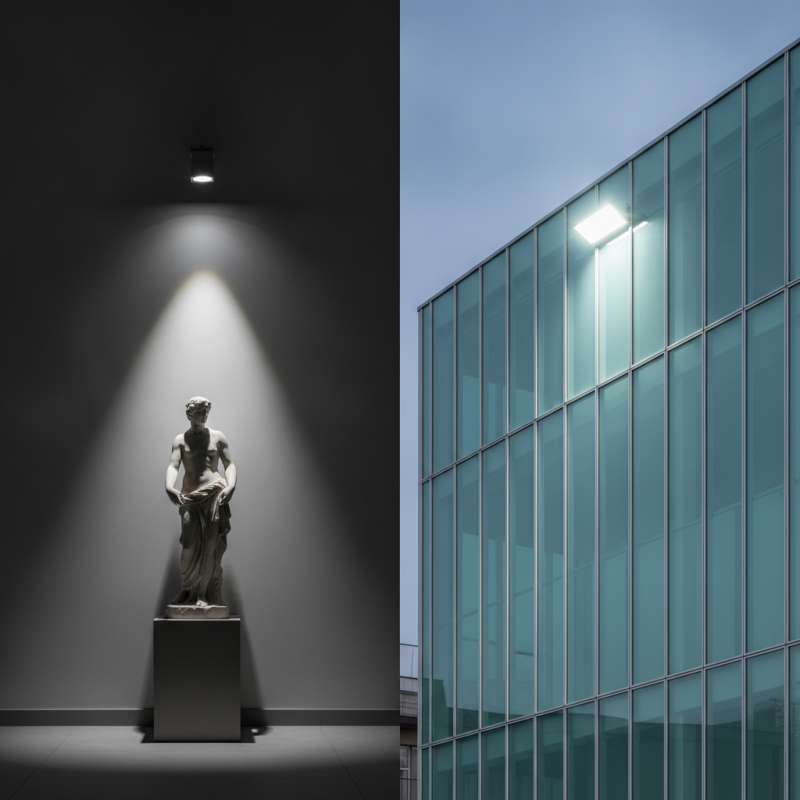
Differences in Light Distribution Between Spotlight and Floodlight
When comparing spotlights and floodlights, the primary difference lies in their light distribution. Spotlights produce a focused beam of light, targeting a specific area. This quality makes them ideal for highlighting architectural features or creating mood lighting. According to industry reports, spotlights can achieve a beam angle as narrow as 15 degrees, allowing for precision lighting effects.
In contrast, floodlights provide a wide beam, spilling light over a larger area. Their beam angles can range from 60 to 120 degrees. This broader coverage is useful for illuminating outdoor spaces, such as parking lots or sports fields. A study by the Illuminating Engineering Society indicates that floodlights can effectively reduce the number of fixtures needed to achieve uniform light distribution.
However, using these lighting options is not without challenges. Spotlights might create harsh shadows if mispositioned. Floodlights can wash out details, leading to over-illumination. Depending on the intended effect, the wrong choice could detract from a space's aesthetics. Analyzing these distinctions can enhance your lighting design while addressing potential shortcomings.
Applications of Spotlight and Floodlight in Various Settings
In various settings, spotlights and floodlights serve distinct purposes. Spotlights focus on a specific area, creating a concentrated beam of light. This is ideal for highlighting features like artwork or key displays. For instance, in galleries or museums, spotlights can enhance the visibility of particular pieces. The precise direction of the light draws attention and enhances the overall ambiance.
Floodlights, on the other hand, provide broader illumination. They are commonly used in outdoor settings, such as parking lots or sports fields. Floodlights ensure that large areas are well-lit, improving safety and visibility. They enable activities to continue after dark, fostering a sense of security. However, their light distribution can sometimes be too harsh, causing glare that distracts from the intended focus.
Understanding these differences is critical for optimal lighting solutions. The right choice depends on the environment and the desired effect. While spotlights add drama, floodlights offer security. Evaluating these elements can lead to better lighting decisions, encouraging user engagement and satisfaction.
Advantages and Disadvantages of Using Spotlights
When considering lighting options, spotlights offer unique advantages and disadvantages. Spotlights provide focused light, making them ideal for highlighting specific areas or objects. This precise illumination can enhance the aesthetics of a room or outdoor space. For example, using a spotlight on artwork can create dramatic effects and draw attention to details. However, this concentrated lighting can also create harsh contrasts and shadows.
On the downside, spotlights can sometimes produce excessive glare. This may be uncomfortable for people in the illuminated space. If not positioned correctly, they can detract from the overall ambiance. Maintenance is another challenge. Over time, bulbs may require frequent replacement due to their intense use. Additionally, energy consumption can increase, raising utility bills.
Choosing spotlights requires careful consideration. An appropriate balance between illumination and comfort is vital. In environments such as galleries or exhibition spaces, the focused light can be beneficial, yet it requires mindful placement. At home, mixing spotlights with softer ambient lighting could create a warm atmosphere while still showcasing favorite items. Balance is key in maximizing the benefits of spotlights while mitigating their drawbacks.
Comparison of Spotlight and Floodlight Features
This chart compares various features of spotlights and floodlights, showcasing their beam angles, brightness, coverage areas, and energy efficiency. Spotlights tend to have a narrower beam angle and lower coverage area but provide higher brightness per lumen, whereas floodlights cover a larger area with lower efficiency.
Advantages and Disadvantages of Using Floodlights
Floodlights are often used for large areas, providing broad illumination. They are commonly seen in parking lots, sports fields, and emergency situations. Their strength comes from their ability to light up vast spaces. However, they also have notable challenges.
One significant disadvantage of floodlights is their energy consumption. They can lead to higher electricity bills, especially if left on for extended periods. Another issue stems from light pollution. Floodlights can be overly bright, affecting nearby homes and nature. This creates a challenge for urban planning.
Tips: To mitigate some downsides, consider using motion sensors. These can automatically turn off lights when no one is around, saving energy. Additionally, opting for LED floodlights might help lower energy consumption and reduce environmental impact.
While floodlights have their benefits, the drawbacks deserve consideration. Reflect on your specific needs. If a space doesn’t require constant illumination, alternative lighting may be better. Assess your options carefully.
Choosing the Right Lighting: Spotlight vs. Floodlight Guidelines
When choosing between spotlights and floodlights, it's crucial to understand their key differences. Spotlights create focused beams of light, ideal for highlighting specific areas or objects. They work well in gardens, art displays, or architectural features. Floodlights, on the other hand, emit broad light that covers larger spaces. They are perfect for security, parking lots, or illuminating outdoor areas.
Consider the purpose of your lighting. If you want to accentuate a focal point, choose spotlights. They allow you to direct light precisely, enhancing beauty and visibility. For general illumination, floodlights provide a more practical solution. Their expansive reach ensures safety and accessibility in larger areas.
Tips:
1. Assess the area before installation. Identify where you need focused light versus broad illumination.
2. Be mindful of shadows. Depending on your setup, spotlights can create unwanted shadow effects.
3. Experiment with positioning. Sometimes, slight adjustments in angles can drastically change the lighting effect.
FAQS
: Spotlights produce a focused beam, while floodlights provide a wide beam for larger areas.
Use a spotlight to highlight specific features, like artwork or architectural details. Precision is key.
Spotlights can create harsh shadows and excessive glare if not positioned correctly. This affects comfort.
Floodlights are ideal for large spaces like parking lots or sports fields, offering broad illumination.
Yes, floodlights can lead to high energy bills and light pollution, affecting nearby homes and environments.
Consider using motion sensors and opt for LED floodlights to reduce energy consumption and light pollution.
Mix spotlights with softer ambient lighting to create warmth while still showcasing important items.
Reflect on your specific needs. If constant illumination isn't necessary, other lighting options may work better.
Conclusion
In understanding what is the difference between spotlight and floodlight, it's essential to examine their light distribution characteristics. Spotlights emit a concentrated beam of light, making them ideal for highlighting specific areas or objects, while floodlights provide a broader, more diffused light suitable for illuminating larger spaces.
When it comes to applications, spotlights are commonly used in theaters, art galleries, and for accent lighting in homes, whereas floodlights are often utilized for outdoor lighting, security purposes, and sports facilities. Each type has its advantages and disadvantages; spotlights offer precision but can create harsh shadows, while floodlights provide extensive coverage but may lead to light pollution. Ultimately, choosing the right lighting depends on the specific needs of the setting and the desired effects, highlighting the importance of understanding these differences.

 Lili Light