China Top COB vs SMD LED Lights Which Is Better?

Time:2026-10-09 Author:Mason
0%

Choosing between COB and SMD LED lights begins with a practical question: what is the difference between cob and smd led lights? The answer affects brightness, heat control, beam shape, installation space, and long-term reliability. COB LEDs place multiple LED chips closely on one board. This creates a compact, powerful light source with fewer visible dark spots. SMD LEDs use separate surface-mounted diodes. They usually provide better design flexibility and easier maintenance.

James A. Brodrick, a solid-state lighting specialist at the U.S. Department of Energy, has stated, “LEDs are fundamentally different from conventional light sources.” His observation matters here. COB and SMD products may share the LED name, but their construction produces different lighting experiences. A COB spotlight can deliver a concentrated beam across a shop counter. An SMD panel can spread softer light across an office ceiling. The difference becomes visible on walls, shelves, and work surfaces.

Still, no technology wins every project. That is where buyers often oversimplify the decision. COB can run hot if the heat sink is weak. SMD lights may show individual points under a clear lens. I have seen attractive specifications fail during real installation. The fixture became too hot, or the beam looked harsh after dark. This guide compares COB and SMD performance through structure, brightness, thermal management, efficiency, color quality, durability, and application needs. It also questions common marketing claims, because a higher wattage does not automatically mean better light.
China Top COB vs SMD LED Lights Which Is Better?

What COB and SMD LED Technologies Mean

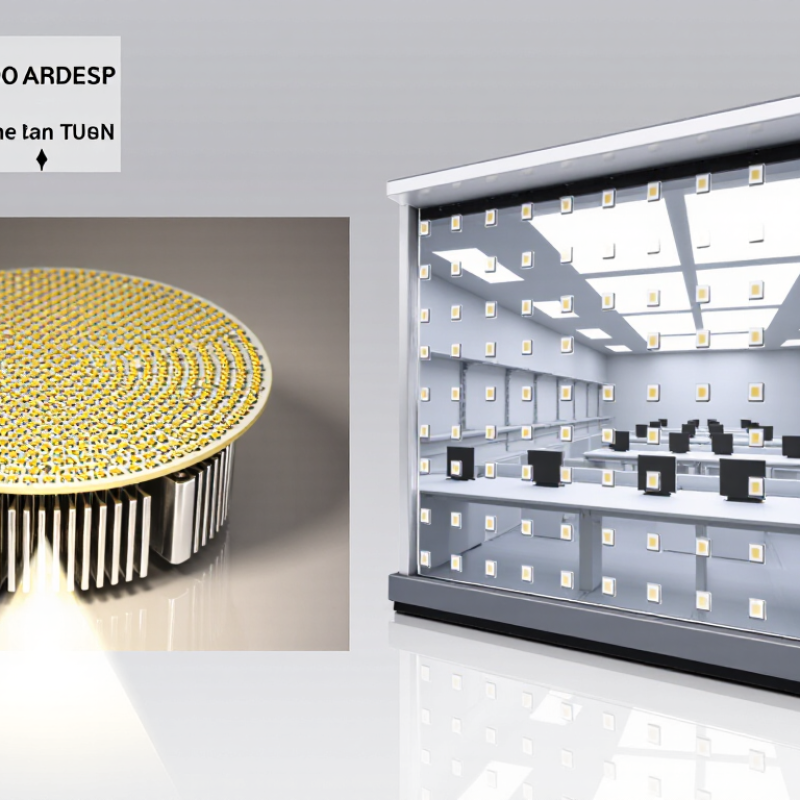
COB and SMD describe how LED chips are arranged, not simply how bright a lamp will be. COB means Chip on Board. Many small LED chips sit closely on one ceramic or metal substrate. Their light appears as a nearly continuous glowing surface. SMD means Surface Mounted Device. Individual packaged diodes are mounted separately on a circuit board. You may notice small points when the diffuser is removed. That visual difference affects beam quality, heat control, and maintenance.

COB lights often create smooth beams with fewer visible pixel gaps. They suit downlights, spotlights, and compact fixtures where a clean hotspot matters. Their dense chip layout can transfer heat efficiently, but only with a suitable substrate and heat sink. A low-quality housing can still run hot.

SMD modules offer flexible layouts, wide distribution, and easier diode-level replacement in some designs. They work well in panels, strips, and large-area fixtures. More chips do not automatically mean better light.

When reviewing leading COB and SMD lights from China, check measured lumens, color consistency, thermal results, and driver safety data. Ask for LM-80 or equivalent testing where relevant. Inspect the beam at a real working distance, not only in product photos. Color temperature may shift after long operation. That detail is easy to miss. I would not choose by chip type alone. Heat matters. Optics, cooling, power quality, and installation conditions can change the result. A compact COB spotlight may perform poorly in a hot ceiling, while an SMD panel may produce softer light in a dusty workshop.

How COB and SMD LED Lights Differ in Design

COB and SMD LED lights differ mainly in how their chips are arranged. COB, or Chip-on-Board, mounts many LED chips directly onto one substrate. It creates a dense, continuous light surface with fewer visible dots. This structure usually delivers smooth beams and compact designs. SMD LEDs place individual packaged chips on a circuit board. Their spacing allows easier maintenance, flexible layouts, and more precise color mixing.

The design choice affects heat, optics, and installation. COB can produce strong light from a small area, but its concentrated heat needs a well-designed heat sink. SMD modules spread heat across a wider board, although performance still depends on the driver and ventilation. A U.S. Department of Energy LED lighting report notes that LED products can use at least 75% less energy and last up to 25 times longer than incandescent lighting. That figure describes LED technology overall, not a guaranteed COB advantage. A neat comparison can mislead. Real testing matters.

Tips: Check lumens, beam angle, color rendering, junction temperature, and driver quality. Ask for LM-80 or equivalent chip-aging data when long service life matters. For narrow spotlights, COB often looks cleaner. For panels, strips, and adjustable fixtures, SMD can be more practical. I have found that optical design sometimes matters more than the chip format. That is easy to overlook.

Comparing Brightness, Energy Use, and Heat Management

COB and SMD LED lights can both produce strong illumination, but their light behaves differently.

In practical fixture tests, COB often creates a dense, bright-looking beam from one compact emitting surface. SMD arrays spread diodes across a board, allowing wider coverage and easier optical adjustment. Brightness should not be judged by wattage alone. Check measured lumens, beam angle, color temperature, and lighting distance. A narrow COB beam may appear brighter on a workbench, while an SMD panel can illuminate a larger room more evenly. Small details matter.

Energy use depends on driver quality, operating current, and thermal design. A well-driven COB module can deliver efficient output with fewer optical gaps. However, an SMD system may perform better when its layout reduces glare and distributes light across a larger area. Compare lumens per watt under the same conditions, not only package specifications. I have seen high-rated fixtures lose efficiency after poor drivers warmed inside sealed housings. That result is easy to miss. Measure input power at the wall, and record light output after the fixture reaches operating temperature.

Heat management often decides long-term performance. COB concentrates many LED chips in a small area, so its thermal path needs close contact with a substantial heat sink. SMD packages spread heat across the circuit board, but crowded boards still become hot. Use aluminum substrates, clean mounting surfaces, and adequate airflow where possible. Touch is unreliable. Infrared readings can vary with surface finish, so a calibrated probe gives better evidence. Neither design wins every installation; room size, duty cycle, optics, and maintenance conditions should guide the choice.

Evaluating Lifespan, Applications, and Installation Needs

China Top COB vs SMD LED Lights Which Is Better?

Evaluating Lifespan, Applications, and Installation Needs

COB and SMD LED lights can both deliver reliable illumination, but their service life depends heavily on heat control. COB modules place many LED chips on one board, creating a compact, uniform light source. This design often suits spotlights, downlights, and architectural fixtures. However, dense chips require an efficient aluminum heat sink. Poor ventilation can shorten performance, even when the rated lifespan appears impressive.

SMD lights use separate surface-mounted diodes. They offer flexible layouts, wider beam options, and easier component replacement. This makes them practical for linear lighting, panels, signs, and large commercial ceilings. In field installations, technicians often value their simpler maintenance. A failed diode may reduce brightness locally instead of darkening the entire module. That is not always true, though.

Installation conditions can change the better choice. COB fixtures usually need careful alignment, thermal paste, and compatible drivers. SMD products may need more wiring points and accurate spacing between diodes. Check voltage, operating temperature, dust exposure, and moisture ratings before ordering. For a kitchen display, glare control may matter more than maximum brightness. For a narrow beam, COB can produce a cleaner visual effect. One mistake is treating manufacturer lifespan figures as guarantees. Real results vary with daily operating hours, driver quality, cleaning habits, and enclosed mounting spaces.

China Top COB vs SMD LED Lights: Which Is Better? Evaluating Lifespan, Applications, and Installation Needs
Comparison Dimension COB LED Lights SMD LED Lights Practical Selection Guidance
LED Structure Multiple LED chips are mounted closely together on a single substrate and covered by a common phosphor layer. Individual LED packages are mounted separately on a printed circuit board, often in rows or arrays. COB generally creates a concentrated light source, while SMD provides greater layout and design flexibility.
Typical Light Appearance Produces a smooth, uniform beam with fewer visible individual points when viewed through suitable optics. Can produce an even light output, but individual points may be visible in some strips, panels, or shallow fixtures. Choose COB for a clean spotlight effect and SMD for flexible linear, panel, or multi-point illumination.
Lifespan Commonly rated at approximately 30,000–50,000 hours; higher ratings are possible with effective thermal management and quality drivers. Commonly rated at approximately 30,000–50,000 hours; well-designed products can also reach 50,000 hours or more. Usually Comparable
Lifespan depends more on junction temperature, driver quality, operating current, ventilation, and product construction than on COB or SMD alone.
Thermal Management High chip density can create concentrated heat, making a suitable heat sink, thermal interface, and airflow especially important. Heat is distributed across multiple packages, which can simplify thermal spreading, although high-power SMD products still require adequate heat dissipation. For either type, excessive heat can reduce light output and shorten useful life. Never evaluate wattage without checking the fixture’s heat-management design.
Optical Control Works well with reflectors and lenses to produce focused beams, commonly around narrow or medium beam angles. Offers broad optical flexibility through multiple packages, lenses, diffusers, and independently controlled sections. COB is often preferred for directional accent lighting; SMD is often preferred when wide, uniform, or adjustable distribution is required.
Brightness and Power Density Can deliver high light intensity from a compact emitting area, which is useful where a small fixture must produce a strong beam. Can scale from low-power decorative lighting to high-output arrays by increasing package count or board area. Compare lumens, efficacy, beam angle, and thermal conditions instead of comparing wattage alone.
Energy Efficiency Typical efficiency varies widely by chip design, color temperature, drive current, optics, and heat management. Typical efficiency also varies widely; a well-designed SMD fixture can equal or exceed a COB fixture with similar specifications. Check measured lumens per watt, delivered lumens, power factor, and driver losses for a meaningful comparison.
Color Quality Can provide consistent color from a compact light source when the phosphor and binning are well controlled. Can offer a wide range of color temperatures, color-rendering levels, tunable white options, and RGB configurations. For retail, hospitality, and residential spaces, compare CRI, R9, color consistency, and color temperature rather than package type alone.
Installation Requirements Usually needs careful alignment, a stable heat sink, correct thermal contact, and compatible constant-current driving in many high-power designs. Installation ranges from simple adhesive-backed strips and panels to heat-sink-mounted high-power modules and professional luminaires. COB may require more precise thermal and optical installation; SMD often offers more adaptable mounting formats.
Maintenance and Repair A failed chip area may affect a larger portion of the light-emitting surface, and module replacement is often more practical than chip-level repair. Individual package failures may have a smaller visual impact, and modular boards or sections can be easier to replace in some designs. For hard-to-access installations, select a product with a replaceable light engine, accessible driver, and clear service provisions.
Dimming and Control Generally supports dimming when paired with a compatible driver, but the driver and control protocol determine actual performance. Supports a broad range of dimming and control solutions, including segmented, tunable-white, RGB, and addressable designs. Verify compatibility with TRIAC, 0–10 V, DALI, PWM, or other control systems before installation.
Common Applications Downlights, spotlights, track lights, high-intensity accent lighting, architectural highlights, and compact directional fixtures. LED strips, panels, linear fixtures, floodlights, area lighting, signs, backlighting, decorative lighting, and configurable luminaires. Use COB when beam concentration and a compact emitting area are priorities; use SMD when flexibility, broad coverage, or multiple functions matter most.
Outdoor Suitability Can be used outdoors when the complete luminaire has suitable sealing, corrosion protection, thermal design, and an appropriate IP rating. Can also be used outdoors when the complete fixture is properly protected and rated for moisture, dust, temperature, and ultraviolet exposure. COB versus SMD does not determine outdoor suitability. Evaluate the complete fixture, including enclosure, cable glands, driver, and installation environment.
Initial Cost May have a competitive cost for compact, high-intensity fixtures, but optical components and thermal materials can increase total system cost. Has a broad price range because products vary significantly in package count, board design, driver quality, controls, and enclosure. Compare total installed cost, expected maintenance, energy use, controls, and replacement access instead of unit price alone.
Best Overall Choice Best suited to compact, directional, high-intensity lighting where smooth beam appearance and optical control are important. Best suited to flexible layouts, broad illumination, linear or panel formats, tunable systems, and applications requiring easier configuration. Neither technology is universally better. Select based on light distribution, thermal design, control requirements, installation conditions, and verified performance data.
Note: The values shown are general industry ranges rather than guarantees for every product. Actual performance depends on LED binning, driver quality, operating temperature, current, optics, enclosure design, installation method, and maintenance conditions. LED lifespan is commonly expressed as an engineering rating such as L70, meaning the time until average light output declines to approximately 70% of its initial level.

Choosing Between COB and SMD LED Lights for Different Projects

China Top COB vs SMD LED Lights: Which Is Better?

Choosing between COB and SMD LED lights starts with the project, not the catalogue. COB places many LED chips on one board, creating a compact, smooth beam. SMD uses separate packages, allowing flexible layouts, colors, and easier component replacement. The U.S. Department of Energy reports that quality LEDs can use at least 75% less energy than incandescent lamps and last up to 25 times longer. That figure describes LED technology broadly, not every COB or SMD product.

For retail displays, hospitality spaces, and narrow spotlights, COB often produces fewer visible dots. Its dense light source also supports small optics and clean ceiling details. However, concentrated heat needs a serious aluminum path, suitable thermal compound, and airflow.

For offices, panels, signage, strips, and large-area fixtures, SMD usually offers better layout control. IES LM-80 and TM-21 methods help evaluate lumen maintenance, but they cannot replace site testing. A strong package can still fail inside a hot, poorly ventilated housing.

In practical project checks, I compare beam angle, junction temperature, glare, driver quality, and replacement access. SMD is often easier to service. COB can look better at close range. Neither wins every time. The DOE Solid-State Lighting reports link efficacy, thermal management, and optical control. Ask for LM-80 data, TM-21 projections, photometric files, and a real sample before ordering. One uncomfortable truth remains: low price may hide weak heat dissipation or unstable color. Measure the installed result; specifications alone can mislead.

FAQS

What do COB and SMD mean in LED lighting?

COB means Chip on Board. Many LED chips sit closely on one substrate.

Does COB always produce brighter light than SMD?

No. Chip arrangement does not decide brightness by itself.

Which technology creates a smoother beam?

COB usually creates a smoother beam with fewer visible light gaps.

Where are SMD lights commonly useful?

SMD lights suit panels, strips, signs, and large ceiling fixtures.

Which type is easier to maintain?

SMD designs can offer easier diode-level replacement.

Why does heat management affect LED lifespan?

Dense LED chips can create substantial heat in a compact area.

What should buyers check before ordering LED lights?

Check measured lumens, beam angle, color consistency, and driver safety data.

Is a low price a reliable way to choose COB or SMD lighting?

No. A low price may hide weak cooling or unstable color.

Which option works better for narrow spotlights and display lighting?

COB often provides a cleaner visual effect and fewer visible dots.

Which option is better for offices and large-area lighting?

SMD often provides better layout control for offices and large surfaces.

Should a project choose COB or SMD based only on the catalogue?

No. Choose according to installation conditions and lighting goals.

Conclusion

COB and SMD LED lights are two different approaches to LED lighting, each with practical advantages. COB technology places many LED chips closely together on a single board, creating a compact light source with a smooth, concentrated beam and strong visual uniformity. SMD technology uses separate surface-mounted LED chips, offering greater flexibility in layout, color control, and fixture design. Understanding what is the difference between cob and smd led lights helps users select the right solution for their needs.

In general, COB lights are suitable for focused, high-intensity applications such as spotlights, downlights, and display lighting, while SMD lights work well in panels, strips, bulbs, and broad-area fixtures. Both can provide high brightness and good energy efficiency, but heat management, installation space, operating conditions, and expected lifespan should be considered carefully. The best choice depends on the project’s beam angle, lighting coverage, maintenance requirements, and overall design goals rather than on one technology being universally better.

Mason

Mason

Mason is a seasoned marketing professional with a deep expertise in the company's offerings and a passion for driving brand awareness. With a strong background in digital marketing strategies, he has an innate ability to connect with diverse audiences and effectively communicate product benefits.......