How Many Lumens Do I Need for Outdoor Solar Lights in 2026?

Time:2026-11-25 Author:Mason
0%

Choosing solar lights can feel like shopping by guesswork. The box says “bright,” but your path still disappears beneath the maple tree. If you’re asking, “how many lumens do i need for outdoor solar lights,” start with the job, not the biggest number. A small marker light may need only 5–20 lumens. For steps or a garden path, roughly 20–100 lumens per fixture can provide useful guidance. A security light may need 300 lumens or more, depending on its beam and coverage. These are planning ranges, not guarantees.

Lighting researcher Mark Rea’s work points to a useful principle: “Lumens describe output; placement determines usefulness.” This is a practical paraphrase, not a verbatim quotation. It captures an often-missed detail. A narrow beam aimed at a gate can feel brighter than a higher-output lamp scattered across a wide yard. Check the beam angle, mounting height, and nearby obstructions. Then consider battery capacity and winter daylight, because a bright light that fades before midnight may not help much. Read the product’s runtime claims carefully; manufacturers test under different conditions. I would not pretend one number fits every yard. Measure the area, test one fixture, and adjust. In 2026, solar technology keeps improving, but shade and cloudy weather still matter. The right lumen level is the one that makes the step, entrance, or corner clearly visible without flooding the whole yard.
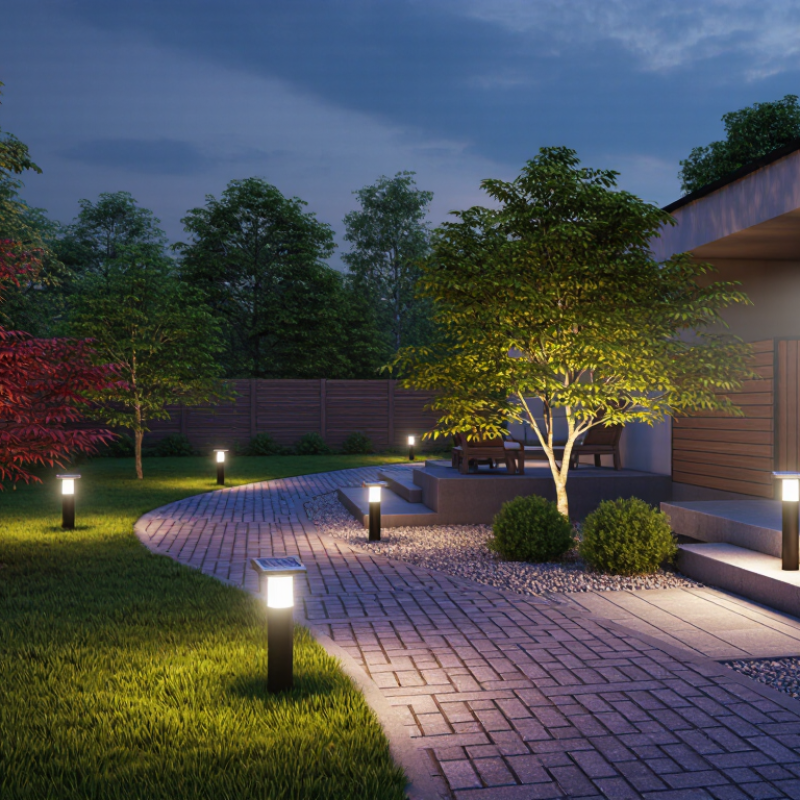
How Many Lumens Do I Need for Outdoor Solar Lights in 2026?

What Lumens Measure in Outdoor Solar Lighting

What Lumens Measure in Outdoor Solar Lighting

Lumens describe the total amount of visible light a solar fixture produces. They do not show how evenly that light reaches a path, doorway, or garden bed. A lamp rated at 500 lumens can still leave dark patches if its beam is narrow or poorly aimed. A number alone can mislead.

For example, a wide beam may spread modest output across several stepping stones, while a focused beam creates a brighter pool near the gate. Distance matters, too: light falling on a surface becomes less intense as you move farther away. Look at the fixture’s beam pattern and mounting height alongside its lumen rating. Also check whether the stated output is sustained or only a peak value; solar brightness can drop as the battery drains or after cloudy days. That detail is easy to overlook.

Tips: Compare lumen ratings for similar fixture types, then test placement after dark. Keep the panel clear of shade, and allow a few nights to judge performance. If a label omits runtime conditions, treat its figure cautiously. I would not choose by lumens alone.

Which Factors Determine the Brightness You Need

The right lumen level depends on what the light must help you see. A path marker needs less output than a light over steps or a work area. For a quiet garden path, gentle pools of light can be more comfortable than one harsh beam. A doorway or outdoor table usually needs clearer, broader illumination. Distance changes everything.

Measure the area and note where people will stand or walk. A light mounted high spreads its output across more ground, so the surface may look dimmer. Beam angle matters too: a narrow beam creates a bright spot, while a wide beam covers more space. Pale paving reflects light; dark decking and dense plants absorb it. Nearby porch lights can also make a solar fixture seem weaker than its lumen rating suggests.

Consider weather, shade, and runtime, not just the number on the package. Solar panels may collect less energy under tree cover or during short winter days, and a bright setting can drain a battery sooner. That trade-off is easy to overlook. Check whether the stated output describes peak brightness or a sustained setting, and test placement after dark if possible. One move can change the result. A small adjustment in height or angle may improve visibility more than choosing a much brighter light.

How Many Lumens Do I Need for Outdoor Solar Lights in 2026? – Which Factors Determine the Brightness You Need

Outdoor lighting use Typical lumens per fixture Factors that affect the brightness you need Practical guidance
Decorative garden accents 2–20 lumens Whether the goal is a subtle glow or highlighting a small feature; distance from the object; beam direction. Use lower output for gentle ambiance. Several spaced lights often look more even than one bright fixture.
Garden paths and borders 10–50 lumens Path width, spacing, surface contrast, nearby ambient light, and whether the light is shielded or directed downward. Choose enough fixtures to make the route legible without creating glare or bright gaps.
Steps and small entrances 5–50 lumens per step or fixture Number and depth of steps, mounting position, shadows, and the reflectivity of the surfaces. Prioritize consistent illumination of each tread and avoid placing a bright source where it shines into people’s eyes.
Porch or exterior doorway 100–300 lumens Doorway size, nearby wall or ceiling surfaces, how much ambient light is present, and whether the area is used for tasks such as finding keys. A shaded or diffused fixture can make a modest lumen output feel more comfortable and usable.
Driveway or wider walkway 300–800 lumens Area size, mounting height, beam spread, obstructions, and whether one fixture or several fixtures provide coverage. For broader coverage, multiple well-aimed lights may work better than one high-output light.
Security or motion-activated lighting 300–1,200 lumens Coverage area, sensor range, mounting height, beam angle, neighboring properties, and whether the light runs continuously or only when triggered. Use the lowest output that provides useful visibility, and aim the beam to limit glare and spill light.
Large yard or open outdoor area 800–1,500+ lumens Area dimensions, desired uniformity, fixture spacing, mounting height, trees or structures, and expected operating hours. Check the illuminated-area specifications and runtime at the selected brightness; a single fixture may not light a large area evenly.

These ranges are general starting points, not fixed requirements. Actual perceived brightness depends on beam angle, fixture placement, light distribution, surface color, and ambient light. For solar fixtures, available output and runtime can also vary with sunlight exposure, season, weather, battery condition, and brightness settings; advertised maximum lumens may not be sustained all night.

How Many Lumens to Choose for Each Outdoor Area

How Many Lumens Do I Need for Outdoor Solar Lights in 2026?

How Many Lumens to Choose for Each Outdoor Area

Choose lumens by task, not by the biggest number on the box. For a garden path, start around 100–200 lumens per fixture; for a porch or entry, try 300–600. A driveway may need 700–1,200 lumens, while a broad security area can call for 1,000–2,000, depending on mounting height and beam spread. These are practical starting ranges, not fixed standards. The Illuminating Engineering Society’s outdoor-lighting guidance emphasizes matching light levels to the task and controlling glare. A narrow beam can make 800 lumens feel harsh; a wide beam may spread them thin. Think in layers.

Tips: Walk the area after dark before buying. Place a sample light where people actually step, then check for dark gaps and glare at eye level. The U.S. Department of Energy notes that LEDs use at least 75% less energy than incandescent lighting, but solar performance still depends on sunlight, battery capacity, and winter conditions. More lumens can mean shorter runtime. I would choose the lowest output that safely shows steps, door hardware, or a driveway edge, then adjust after a few nights. I may be wrong about the ideal brightness until I see the site.

How to Estimate Coverage, Placement, and Number of Lights

How Many Lumens Do I Need for Outdoor Solar Lights in 2026? The answer depends on what you need to see, not just the size of your yard. A path may need about 100–200 lumens per light for comfortable visibility, while a doorway often benefits from 300–700 lumens. These are starting ranges, not guarantees. Lens shape, mounting height, and nearby walls can change how bright an area feels.

Estimate the coverage before choosing a fixture. Mark the path, steps, or seating area, then note dark gaps and obstacles such as shrubs. A narrow beam concentrates light near a gate; a wider beam spreads it across a patio. Place path lights roughly 6–10 feet apart, adjusting closer on curves or uneven ground. For larger spaces, several modest lights can create more even coverage than one bright fixture.

Walk the area after sunset. Check for harsh glare, shadowed steps, and patches that remain hard to see. A light’s stated lumen output does not tell the whole story; cloudy days, shade, and battery condition can reduce nighttime performance. Leave room to adjust. My first spacing estimate is often too neat on paper, and real gardens rarely cooperate. Add or reposition lights only where the test reveals a genuine dark spot.

How to Compare Solar Light Output and Runtime in 2026

In 2026, comparing outdoor solar lights means checking more than the headline lumen number. Lumens describe brightness, but they do not show how long a light sustains that output. A light may shine brightly for an hour, then dim to conserve power. Check whether the listed runtime refers to steady brightness or a lower setting. Those figures are not always directly comparable.

Tips: Compare lights using the same mode and similar conditions. Note the stated runtime, battery capacity, and whether motion activation affects the estimate. A simple evening test can help: mark the light’s brightness at dusk, then check it again several hours later. Keep the test location consistent.

Placement and weather matter, too. A panel shaded by a fence may collect less sunlight than one in an open yard, reducing overnight runtime. I admit, comparisons are not perfectly tidy: manufacturers may test under different conditions. Look for clearly explained test details, and treat unusually precise runtime claims with care. A useful choice balances enough light for the task with dependable hours after sunset.

FAQS

What do lumens measure in outdoor solar lights?

Lumens measure the total visible light a fixture produces. They do not show how evenly light reaches a path or doorway. A 500-lumen light can still leave dark patches. Numbers can mislead.

How many lumens work well for a garden path?

Try about 100–200 lumens per fixture as a starting point. Place lights roughly 6–10 feet apart, then adjust around curves or uneven steps. Test the spacing after dark.

How bright should a porch or doorway light be?

A range of 300–700 lumens is a reasonable starting point. Nearby walls, mounting height, and beam shape can change how bright it feels. Check that door hardware is easy to see.

How many lumens might a driveway need?

A driveway may need around 700–1,200 lumens. A broad outdoor area may call for 1,000–2,000 lumens, depending on height and beam spread. More is not always better.

Does a higher lumen rating mean better coverage?

Not necessarily. A narrow beam can create a bright pool near a gate, while a wide beam spreads light across several stepping stones. Look at the beam pattern, too.

How can I check for dark spots before adding lights?

Mark the path, steps, or seating area, then walk it after sunset. Look for shadowed steps, glare at eye level, and gaps near shrubs. Move a sample light before buying more.

Will a solar light keep its stated brightness all night?

Not always. Output can fall as the battery drains, after cloudy days, or when the panel sits in shade. Keep the panel clear and judge performance over several nights.

Is one bright fixture better than several smaller ones?

Several modest lights can spread coverage more evenly than one bright fixture. Start with the lowest output that shows steps or driveway edges clearly. My first spacing estimate is often wrong.

Conclusion

Choosing the right brightness for outdoor solar lighting starts with understanding lumens: they measure the amount of visible light a fixture produces. The answer to “how many lumens do i need for outdoor solar lights” depends on the area, its purpose, and how much light is already available. A pathway may need gentle illumination for safe navigation, while an entryway, driveway, or work area may benefit from a brighter beam. The article explains how to match output to different outdoor spaces without adding more light than necessary.

It also covers how fixture height, beam angle, spacing, and obstacles affect coverage, helping you estimate the number and placement of lights. Because solar output can vary as batteries charge and discharge, brightness should be considered alongside runtime, panel performance, and expected hours of use. Comparing these factors can help you choose a practical setup that provides useful light throughout the night.

Mason

Mason

Mason is a seasoned marketing professional with a deep expertise in the company's offerings and a passion for driving brand awareness. With a strong background in digital marketing strategies, he has an innate ability to connect with diverse audiences and effectively communicate product benefits.......