Why do LED lights fade or change color over time? The answer usually lies inside the lamp, not in a single sudden failure. Heat, electrical stress, aging phosphors, and changes in driver components can gradually reduce brightness or shift the light’s color. A once-crisp white ceiling may look warmer, dimmer, or uneven after years of use.
The U.S. Department of Energy’s guidance on LED lifetime explains an important distinction: LEDs commonly lose light gradually rather than switching off at the end of their rated life. Manufacturers often describe useful life using L70—the estimated operating time until light output falls to 70% of its initial level. This is a projection, not a promise that every lamp will behave identically. Testing methods such as IES LM-80 measure lumen and color maintenance in LED packages, modules, or arrays; TM-21 uses those results to project long-term performance.
Lighting researcher Michael Royer of Pacific Northwest National Laboratory has studied color maintenance and LED performance. His research underscores a practical point: measured color shift depends on the LED system and its operating conditions, so a single lifespan figure cannot explain every change. Look for clues. A hot, enclosed fixture, a failing driver, or visibly different colors between neighboring lamps may point to different causes. Some variation is normal. A noticeable shift deserves investigation. This guide examines China’s top 10 LED lights and explains what specifications, installation conditions, and real-world symptoms can reveal.
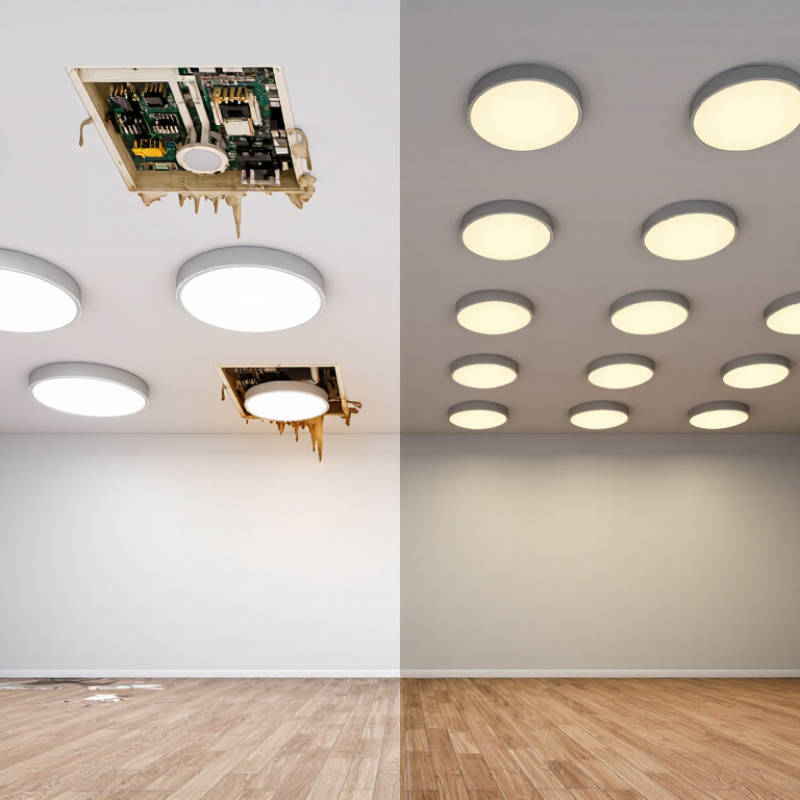
In this comparison, “China’s Top 10 LED Lights” means ten product types or listings selected for a like-for-like review—not an official national ranking. The label alone does not prove quality. A useful comparison checks measured brightness, color temperature, color rendering, power use, warranty terms, and test documentation. The U.S. Department of Energy’s Energy Saver guidance says LEDs use at least 75% less energy than incandescent lighting and can last up to 25 times longer. Those figures describe broad technology potential, not a guarantee for every lamp. A small ceiling bulb running hot in a sealed fixture may perform very differently.
Color changes can arise from heat, aging components, inconsistent batches, or a failing driver. Compare test reports, not just package claims. IES LM-80 data tracks LED package lumen and color maintenance under defined conditions; TM-21 methods use those results to estimate long-term performance. These are useful evidence, but they do not predict every finished fixture’s behavior. I would also check whether the stated test conditions resemble the actual room and fixture. That detail is easy to miss.
Tips: Photograph the lamp’s color beside a white wall when it is new. Record its rated color temperature and keep the receipt. If one unit turns noticeably pink or yellow while matching units stay steady, check ventilation and fixture compatibility before assuming the LED chip alone is at fault.
LED brightness is commonly described by luminous flux, measured in lumens. Lumens indicate how much visible light a lamp produces, but they do not tell you how bright it looks from one spot. For that, illuminance, measured in lux, matters. A desk lamp may deliver plenty of lumens yet leave a book dim if its beam misses the page. Check the distance and beam angle, too. Small details matter.
Color has two useful measurements. Correlated color temperature, expressed in kelvins, describes whether light appears warm or cool. A lower value often looks amber; a higher one looks bluish.
Color rendering index, or CRI, estimates how naturally objects appear under a light source. It is not a complete description, though. Two lamps with similar readings can still make a white wall look slightly different.
When an LED seems to fade, compare its brightness under the same conditions: same room, same distance, and a few minutes after switching it on. Heat, dimmer compatibility, and aging components can affect output or color. A phone camera may exaggerate shifts because automatic exposure keeps adjusting. I have found quick visual comparisons useful, but they are not precise measurements. A basic lux meter can help track changes over time, while a color meter is better for checking color consistency. Even then, readings vary with position. Keep that in mind.
LED lights usually fade because their output depends on heat, electrical current, and component quality. A poorly ventilated ceiling fitting can trap heat around the LED package. Over time, this may reduce brightness and accelerate aging of the driver or phosphor coating. Color can shift, too. A once-neutral white bulb may look slightly yellow, pink, or green beside a newer bulb. Small differences become obvious on a white wall.
The U.S. Department of Energy’s Solid-State Lighting program describes lumen maintenance as a gradual change, not a sudden “burnout.” IES LM-80 testing measures LED-package light output and color over time; the standard’s test duration is at least 6,000 hours, with longer testing often used. These are component test results, not a guarantee that a complete fixture will behave identically in a home. Drivers, temperature, and installation all matter. That distinction is easy to miss.
In practice, check whether fading affects one lamp or an entire row. A single discolored bulb may simply be aging; several shifting together can point to heat buildup or unstable power. Keep vents clear, avoid enclosing fixtures not rated for enclosed use, and replace mismatched lamps in the same room when color consistency matters. I would not diagnose from appearance alone. Light, walls, and memory can fool us.
LED lights do not always fade because the chips have worn out. The driver matters too. It regulates the current flowing through the LEDs, and unstable output can cause flicker, uneven brightness, or gradual color shifts. In practice, symptoms may appear after a light has been on for several minutes, when components warm up. A careful check should include the power supply, wiring connections, and dimmer compatibility, not just the LED panel.
Heat is another quiet cause. Poor airflow, a dusty fixture, or a tightly enclosed ceiling space can trap warmth around the light. Over time, high operating temperatures may weaken the LED package and speed up changes in brightness or color. Look for darkened areas, brittle insulation, or a housing that stays unusually hot. Those clues do not prove a single cause, but they help narrow the inspection.
Materials and assembly also affect performance. Low-quality phosphors, inconsistent coatings, or aging optical covers can make white light look yellow, blue, or patchy. Even nearby lights from the same batch may not age identically. That part is easy to overlook. Compare the affected lamp with a new one under the same conditions, and record when the change occurs. If the color shift is sudden, or the fixture smells hot, switch it off and have a qualified technician inspect it. I would not assume every color change means the LED itself has failed.
LED fading or color change often points to heat, unstable power, or aging components. Start by noting when the shift occurs: after several minutes, only at full brightness, or across every lamp on one circuit. A warm, darkened diffuser can indicate trapped heat. Dust the fixture, check that vents are clear, and avoid enclosing bulbs unless they are rated for enclosed fittings. Heat damage may be permanent.
Check the simple things. Try a compatible dimmer, or run the light at full brightness briefly; some older dimmers can cause flicker or uneven color. If several lights change together, inspect the power supply or driver, and have a qualified electrician assess wiring concerns. For one affected lamp, compare it with an identical, known-good lamp in the same fixture. Keep the original lamp in place during the test, and change only one variable at a time. That helps narrow the cause, though it is not a perfect test.
Record the color and brightness before and after the fixture warms up. A phone photo can help, but automatic camera settings may distort color. Replace a failing driver or lamp with a compatible, appropriately rated part, following the fixture instructions. Don’t ignore a faint burnt smell. Turn off the circuit and seek professional help if you see scorching, hear buzzing, or notice repeated shutdowns.
Typical LED lumen maintenance decreases as operating hours increase. Excessive junction temperature, unstable driver current, poor heat dissipation, ultraviolet exposure, and phosphor aging can accelerate fading or color change.
The values represent a generalized engineering reference curve rather than a specific company or brand. L70 refers to the point where light output reaches approximately 70% of its initial level. To reduce fading and color shift, improve thermal management, use a properly regulated driver, avoid overcurrent operation, and check color coordinates and junction temperature during maintenance.
It means ten product types or listings selected for a like-for-like review. It is not an official national ranking. The label alone proves little.
Check measured brightness, color temperature, color rendering, power use, warranty terms, and test documents. Package claims need supporting evidence.
LED technology can use at least 75% less energy than incandescent lighting. It may also last up to 25 times longer. These figures are not guarantees.
Heat, electrical current, and component quality affect brightness. A sealed fitting can trap heat around the LED package. The driver may age faster.
Aging components, heat, inconsistent batches, or a failing driver can shift color. The change may look obvious beside a white wall. Small differences matter.
Not exactly. LM-80 testing measures LED-package output and color over time. TM-21 estimates longer performance from those results. The finished fixture can behave differently.
LM-80 testing runs for at least 6,000 hours. Longer testing is often used. Still, home temperature and installation conditions may differ.
Photograph it beside a white wall when new. Record its color temperature and keep the receipt. Check ventilation and fixture compatibility first. Do not blame the chip too quickly.
Heat buildup or unstable power may affect the whole row. Keep vents clear and avoid unsuitable enclosed fixtures. Replacing mismatched lamps can improve color consistency.
No. Walls, surrounding light, and memory can mislead you. Compare matching lamps under the same conditions. My first impression may still be wrong.
This article compares ten representative LED lights commonly associated with China’s LED manufacturing market, focusing on performance rather than brand names. It explains how brightness is evaluated through lumens, while color is described by color temperature, chromaticity, and color consistency. These measurements help readers understand why two lights with similar wattage may produce different visual results.
The article also answers the key question: why do led lights fade or change color over time? Common causes include heat buildup, aging LED materials, unstable drivers, voltage fluctuations, moisture, and poor thermal design. It outlines how excessive temperature can reduce light output and shift color, while low-quality components may accelerate deterioration. Finally, the guide presents practical ways to diagnose these problems, such as checking operating temperature, power stability, and installation conditions, and explains how better heat dissipation, suitable drivers, proper ventilation, and reliable materials can help maintain brightness and color quality for longer.

Lili Light