Q1: How many cycles of full charge & discharge can the battery handle?
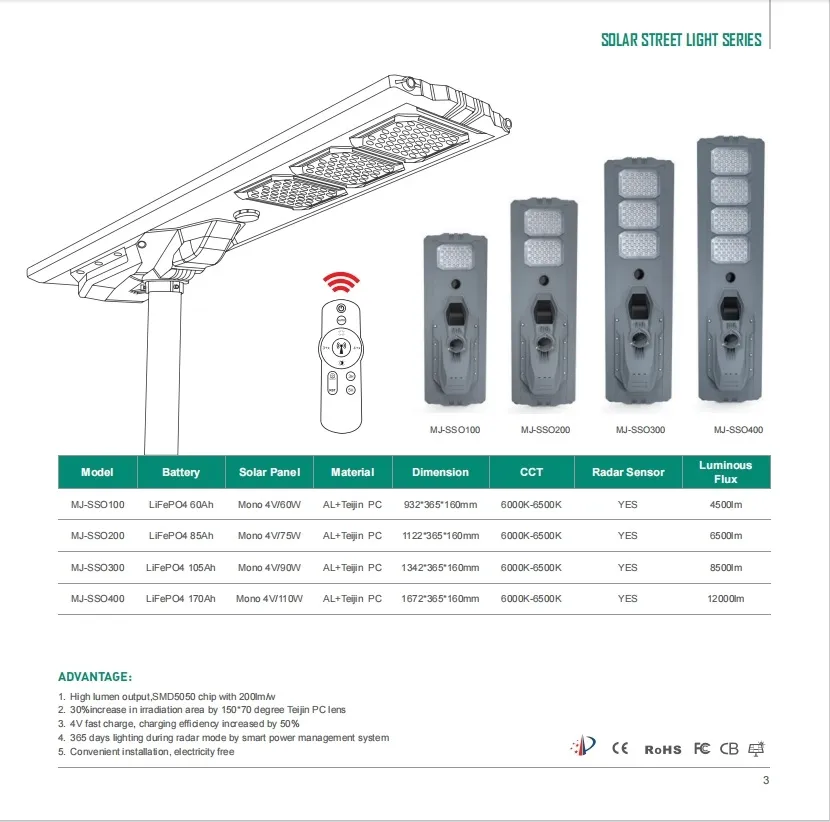
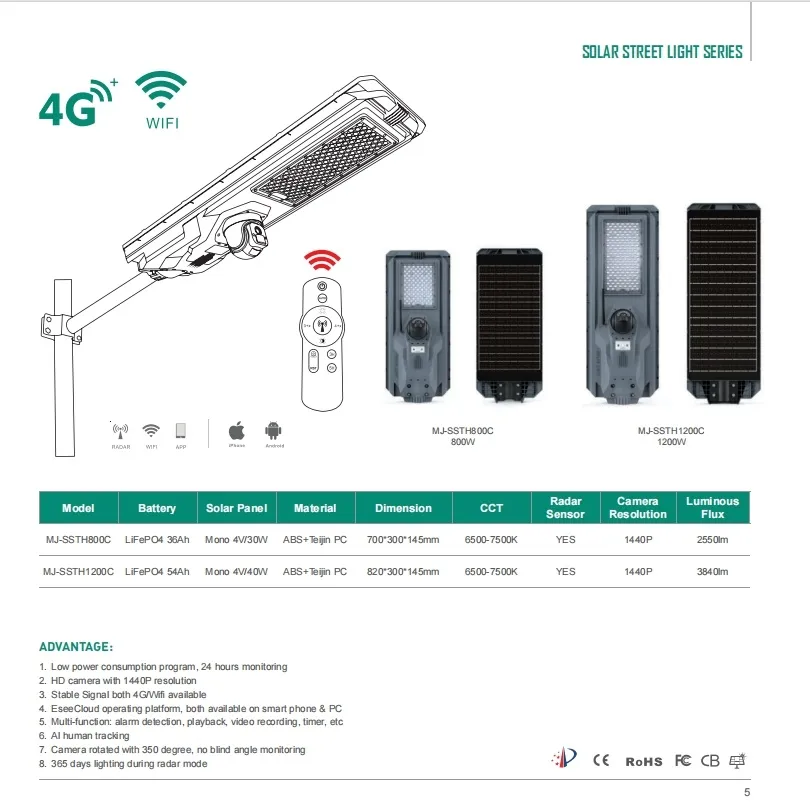
At a 50% discharging depth, it can cycle up to 1,200 times. Under floating charging and discharging conditions, it can achieve 5,000 to 6,000 cycles.
Q2: How do I choose between a 12V, 24V, or normal system voltage?
We design systems with 12V or 24V configurations for solar street lights, and 220-380V configurations for standard street lights.
Q3: What is the main difference between mono and polycrystalline solar panels?
The differences lie primarily in the production process and overall manufacturing cost. Polysilicon technology is more established and mature compared to newer Monosilicon designs.
Q4: Does the controller for this solar street light feature dual time control functions?
Yes, our solar charge controller is designed with dual-time functionality. You can split the 12-hour lighting duration into segments (e.g., 6 hours of full-power lighting followed by 6 hours of half-power lighting).
Q5: What are the standard charging and illumination periods for this model?
The solar system requires approximately 6 hours of charging time to deliver an illumination time of 8 hours under standard operating conditions.
Q6: How often should the solar panel surface be cleaned for maintenance?
To maintain optimal performance, clean dust and dirt off the solar panel surface every 3 months. Additionally, inspect wiring periodically to check for loose connections or wear.
 Lili Light